
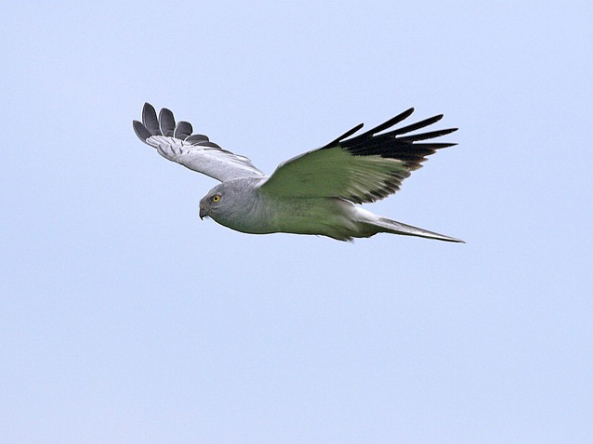
Male hen harrier (Circus cyaneus), phot by Isle of Man Government, CC BY 2.0 <https://creativecommons.org/licenses/by/2.0>, via Wikimedia Commons
Listening to a recent BBC Radio 4 programme about one man’s search for hen harriers reminded me of my own encounters with these wonderful birds, so I revisited a piece I wrote for Hen Harrier Action’s February 2021 newsletter (https://henharrierday.uk/news) about a day out around Parkgate on the Wirral, an excellent place to see over-wintering and other raptors, in November 2020.
To start with the radio programme, though. We are in a field on the Wiltshire-Dorset border at mid-winter with naturalist and writer Chris Yates. He explains that hen harriers move there in November and stay until spring, when they move back “up north” to the uplands. It is cold, there is a distant mist, a hawthorn hedge, tumuli on the hill beyond. The setting is evoked by a beautiful background soundscape.
Yates describes how the male hen harrier “appeared like vapour” from around a hedge, then “slowly dissolved back into the snow again”. He didn’t know what it was – thinking that, with its flat, disc-like face, it was similar to a short-eared owl – and immediately became enraptured with the bird.
As he described the “magical” experience of seeing them, especially one hunting in “ferocious” gusts of wind that knock it off balance, but with which it “rolls”, unperturbed, I thought back to one particular encounter I had with a hunting male on Mull: for the briefest moment, our eyes met, and it truly pierced me to the soul. As Yates observes: “It really is something sacred coming towards me”.
See https://www.bbc.co.uk/programmes/m001dd9d for the programme.
High Tides and Hen Harriers at Parkgate, Wirral
The Dee Estuary is a fantastic place for bird-watching, with a variety of destinations that never fail to provide amazing spectacles. One of the best spots is Parkgate, where over the expanse of saltmarsh various birds of prey can be observed in winter: peregrine, merlin, kestrel, sparrowhawk, buzzard, marsh and hen harrier, as well as two owl species, short-eared and barn. (Some are obviously on site year-round but merlin, hen harrier and short-eared owl are autumn-winter visitors, coming down from their upland breeding grounds to winter on the milder coast.)
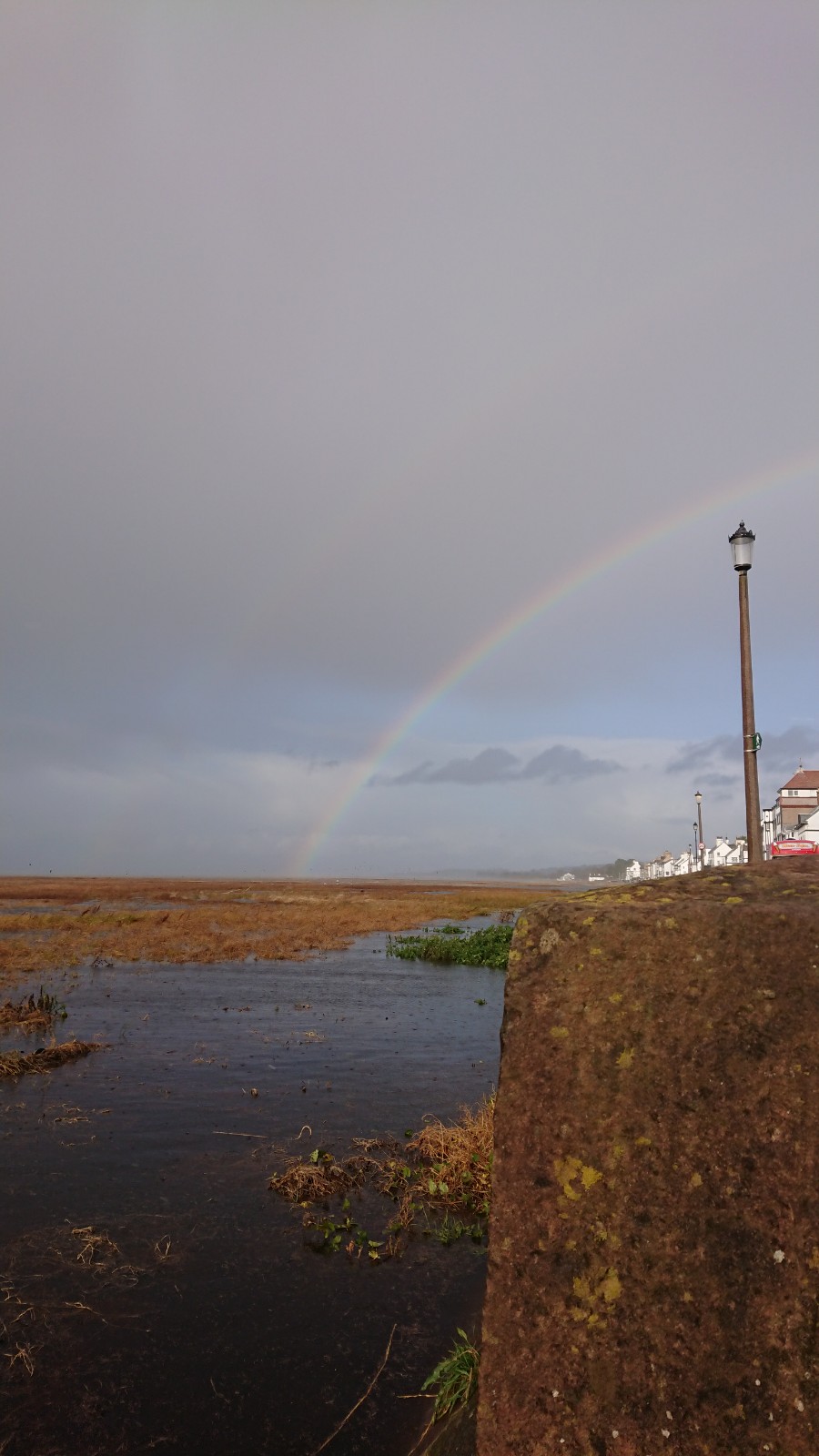
Somewhere over the rainbow there will be raptors – Parkgate
Parkgate is an attractive little village which was once an important port on the River Dee, and later a popular seaside resort. However, in the 1950s, silting caused by human activity led to the area turning into saltmarsh. This was bad news for the people who enjoyed the bathing and the beach, but good news for wildlife and wildlife-watchers. A large area of the saltmarsh was bought by the RSPB in 1979 and is now an SSSI and SPA due to its winter wildfowl and wading birds, and a designated SAC because of its plant assemblages.
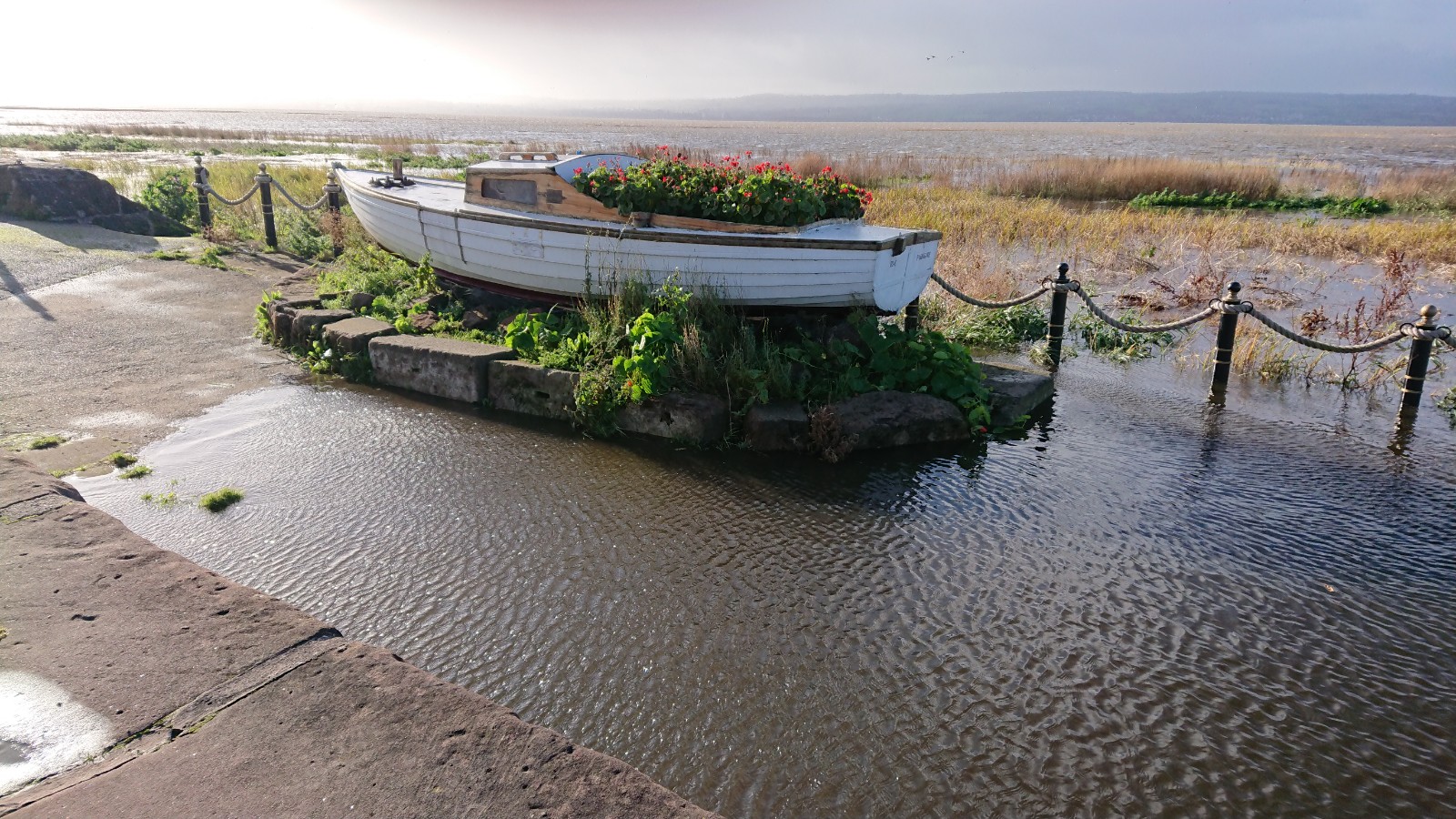
Even the highest tide won’t float this boat – Parkgate
Today, most bird-watchers park in the Old Baths car park and set up their ’scopes to view the marsh – a couple of hours before high tide is a good time to arrive. However, on a very high tide in November 2020, with the wind gusting in my face, I decided to walk along the old sea front instead, heading for the far end of the Parade and the route towards Neston reedbed. Such high tides provide excellent feeding opportunities for the raptors and owls, as the small mammals are driven out from their usual hiding places on the marsh.
I sat on the sea wall for 10-15 minutes, watching as the tide rose and more and more of the marsh was lost to the waters, and hoping that the rodents I could see swimming frantically for the wall would make it to safety. I could feel something moving behind my leg, resting against the wall, but kept ignoring the sensation, until, finally glancing down, I saw a harvest mouse shivering there. I warmed it in my gloved hand until its shivering subsided and it was perky enough to be released in a (hopefully) safe spot.
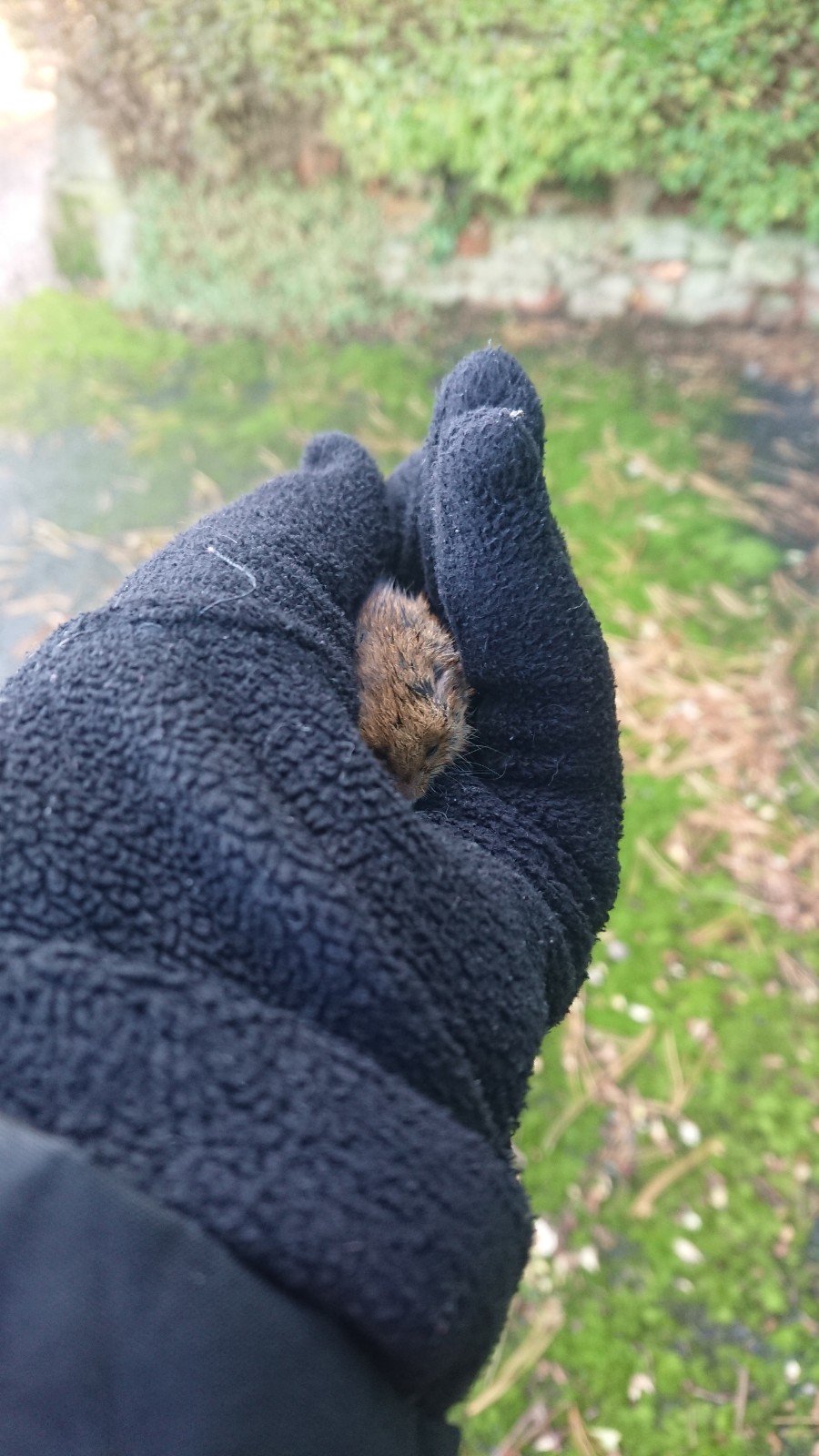
The harvest mouse just after being rescued at Parkgate
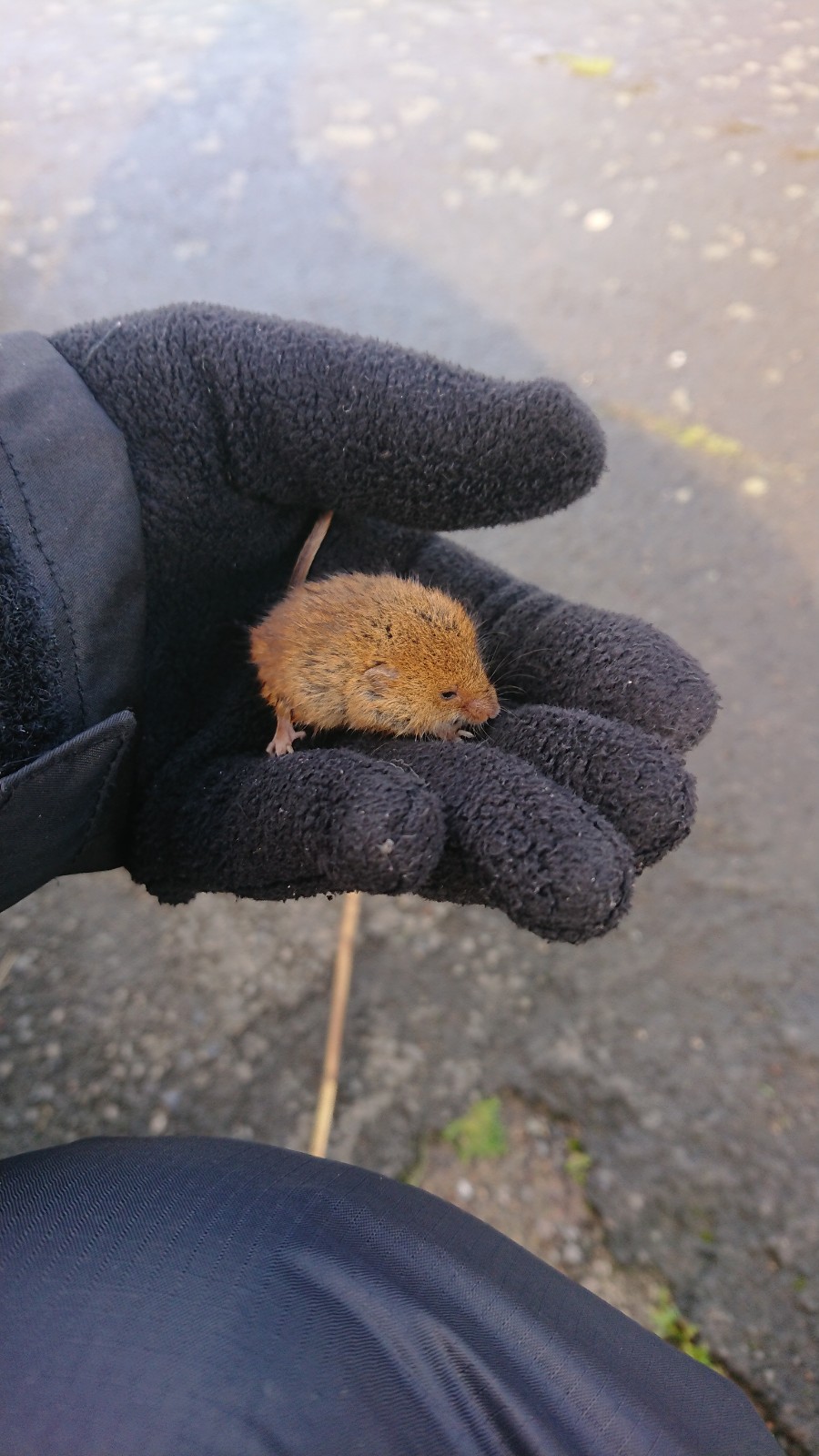
The harvest mouse after spending a few minutes warming up Parkgate
I then continued on my way, along a muddy footpath, from which I was lucky enough to spy a short-eared owl, marsh harrier and ringtail hen harrier hunting at very close quarters. (‘Ringtail’ is what birders call the birds that could be either females or juveniles, as they are both very similar: dark brown birds with white rumps.)
There were numerous other sightings of marsh harriers on this walk – indeed, it is rare to not see them – and it was a pleasure to see short-eared owls and ringtails too, but sadly no ‘grey ghost’ male hen harrier on this occasion, although they are a common sight at Parkgate over the winter. Unfortunately, another lockdown limited opportunities to return ‘over the water’, and somehow the rest of 2021 went by without my returning to see these wonderful birds – I am hoping to change that this winter!
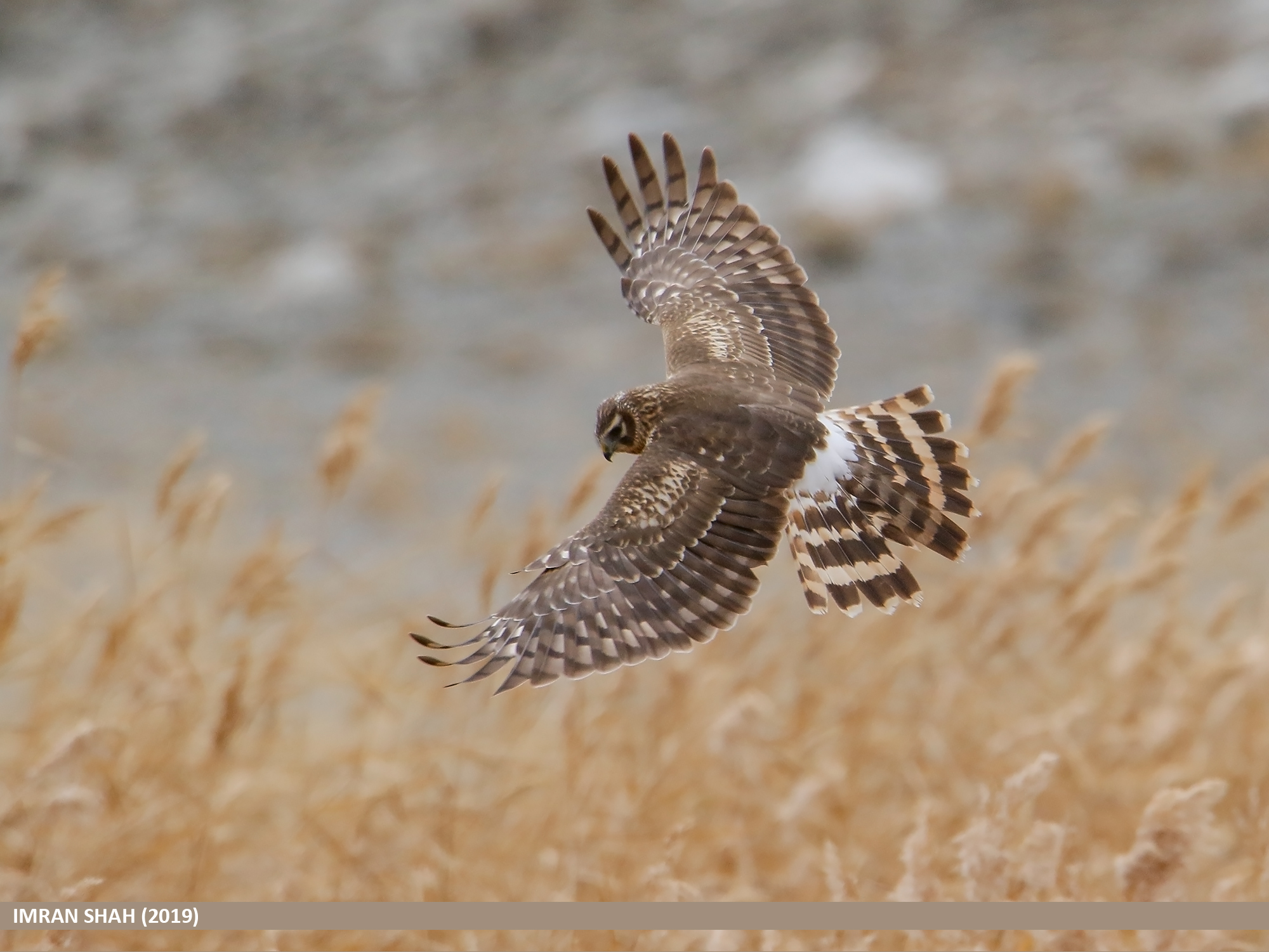
Female/juvenile Hen Harrier (Circus cyaneus) Imran Shah from Islamabad, Pakistan, CC BY-SA 2.0 <https://creativecommons.org/licenses/by-sa/2.0>, via Wikimedia Commons
The Dee Estuary website (http://www.deeestuary.co.uk/index.html) has some great information and photographs of the various species that can be found along the estuary.
SAC: Special Area of Conservation
SPA: Special Protection Area
SSSI: Site of Special Scientific Interest
This revised piece originally published in the Naturewrights Newsletter November 2022.