
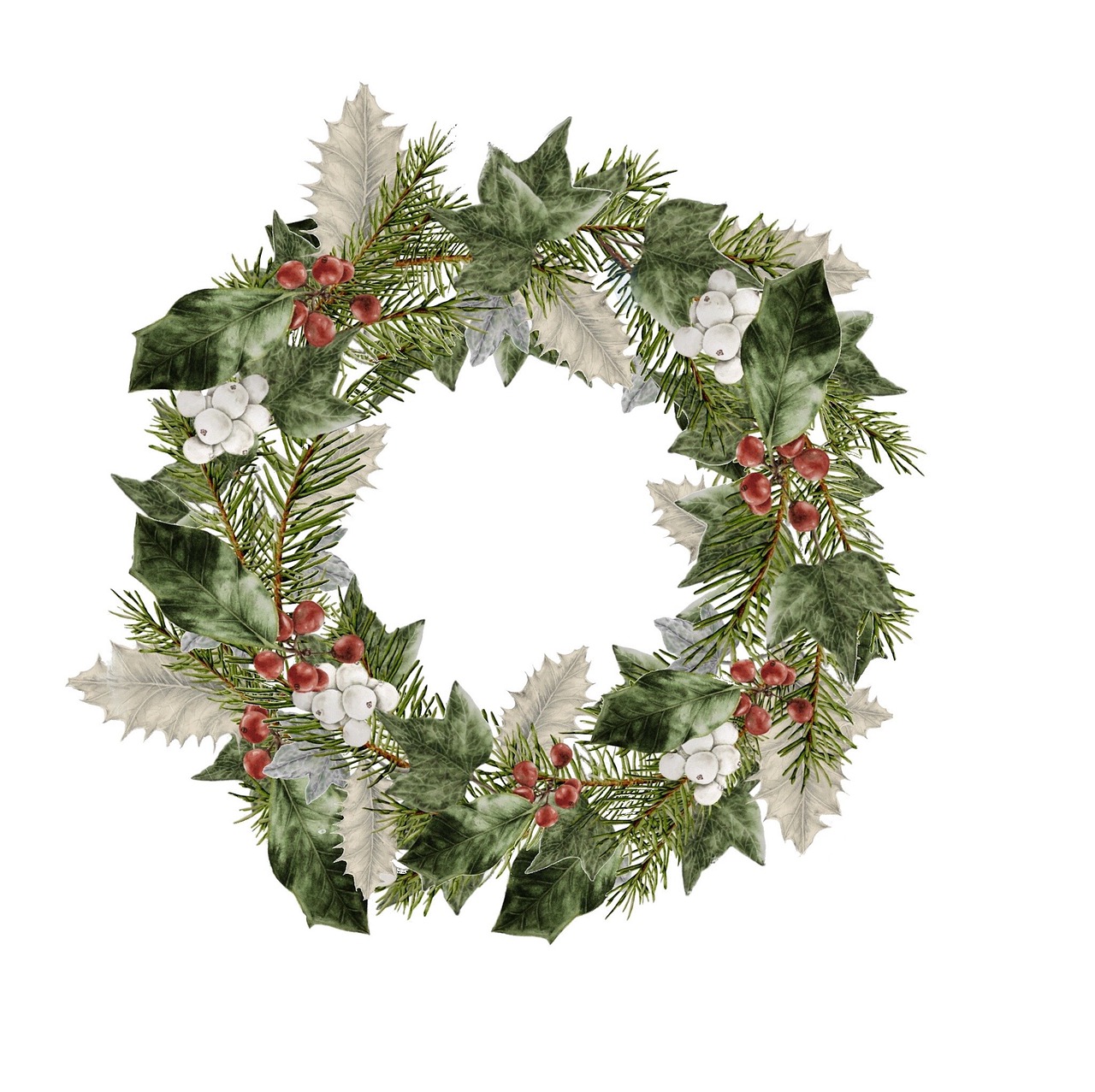
Christmas Wreath – image by Inge van Schaik from Pixabay.com
At this time of year, thoughts turn to decorating the home for the festive season, and may alight upon the Christmas wreath. This evergreen wreath has been a symbol of eternal life since the earliest days of Christianity, and incorporates many familiar native British species, including holly, ivy, mistletoe and pine. However, these species are not only meaningful for us, they are extremely important as food and shelter for wildlife, especially at what can be a harsh time of year.
All of the holly plant is good for wildlife: its nectar, pollen, buds, flowers, berries and leaves provide food for insects including the holly blue butterfly, mammals such as wood mice and birds like the mistle thrush; whilst its spiny leaves offer protection to roosting birds and leaf litter for hedgehogs to hibernate in.
Ivy, too, is an excellent plant for wildlife: like the holly, its berries are available long after the birds have eaten the shorter-lived ones of species such as rowan; and its evergreen, waxy foliage offers great shelter for nesting birds, roosting bats and hibernating insects.
Mistletoe also provides berries for birds during the inhospitable winter months; overwintering blackcaps are especially partial to these white globes, and spread the seeds by wiping their beaks on branches to remove the sticky residue, and thus the mistletoe’s parasitic lifecycle continues. Insects such as the mistletoe weevil rely on it for food and the shelter provided by its leathery leaves.
Scots pine is a keystone species in the Caledonian Forest, supporting iconic Scottish wildlife including pine marten, red squirrel, capercaillie, crested tit, golden eagle, Scottish crossbill and Scottish wood ants. For instance, capercaillie feed on its buds and shoots, whilst the Scottish crossbill uses its parrot-like bill to prise open pine cones and eat the seeds. Even when dead, whilst still standing, these trees provide shelter in the form of nest holes for woodpeckers and owls; once they fall, they are colonised by plants such as bilberry and creeping ladies’ tresses, and lichens and fungi.
Symbols for us but literally life-saving for wildlife – so if you’re out foraging for items to include in your Christmas wreath this year, remember to leave plenty for our feathered, furry, prickly, scaly and other wild friends!
Article first published in the Crieff & Comrie Quair, December 2021
This revised version published in the NatureWrights newsletter, December 2022