
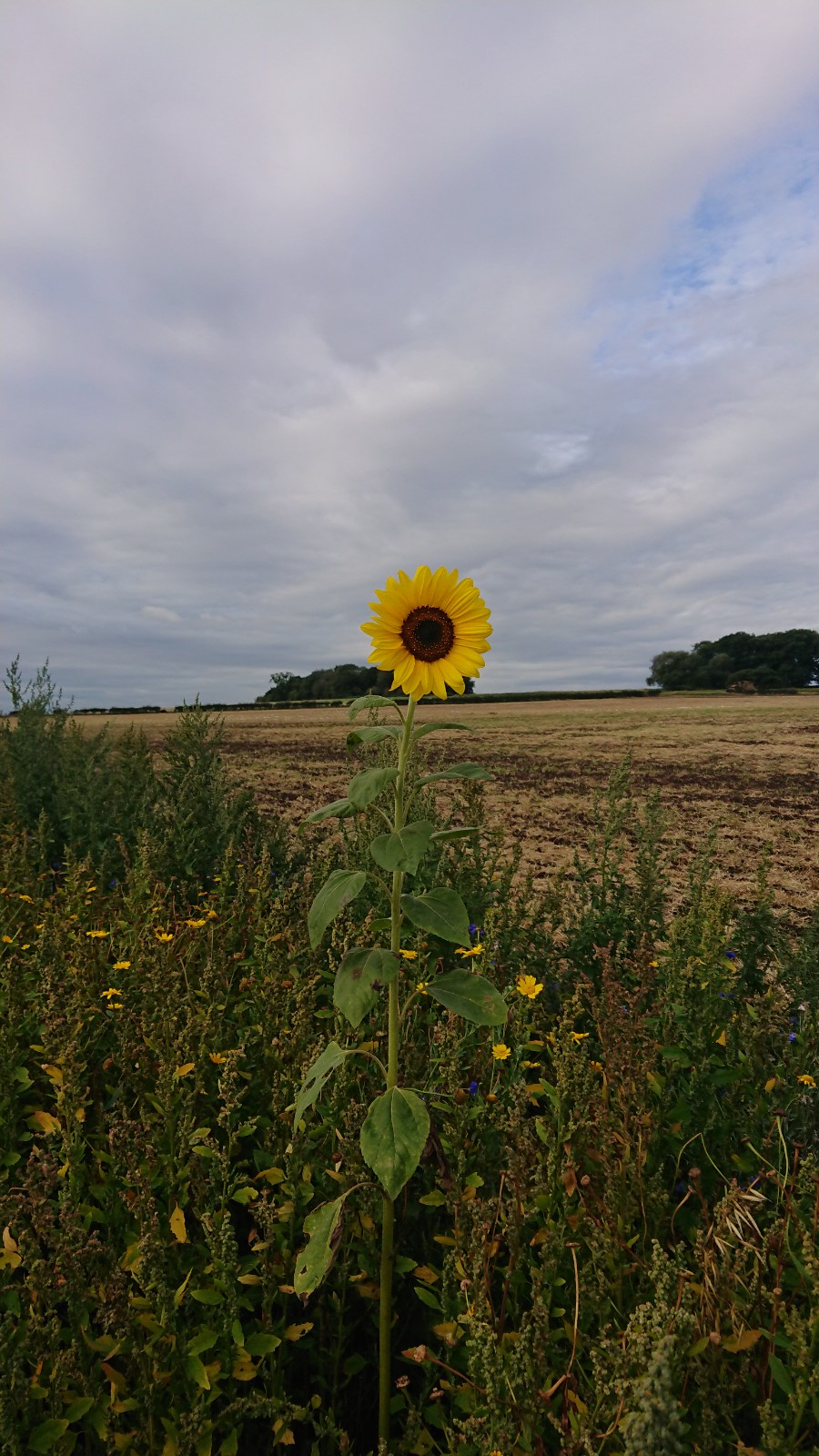
Single sunflower at Hale
It’s late August, six weeks since I last walked from Within Way to the lighthouse and back up Lighthouse Lane, and a lot has changed: the fields have been cut and only stubble remains in many of them; the lacy phacelia has been replaced by tall yellow sunflowers; (what I think is) white goosefoot and common fleabane have sprung up in place of the commercial wildflower mix; and many of spring’s migrant birds have left – I see no reed warblers, whitethroats or swifts here today.
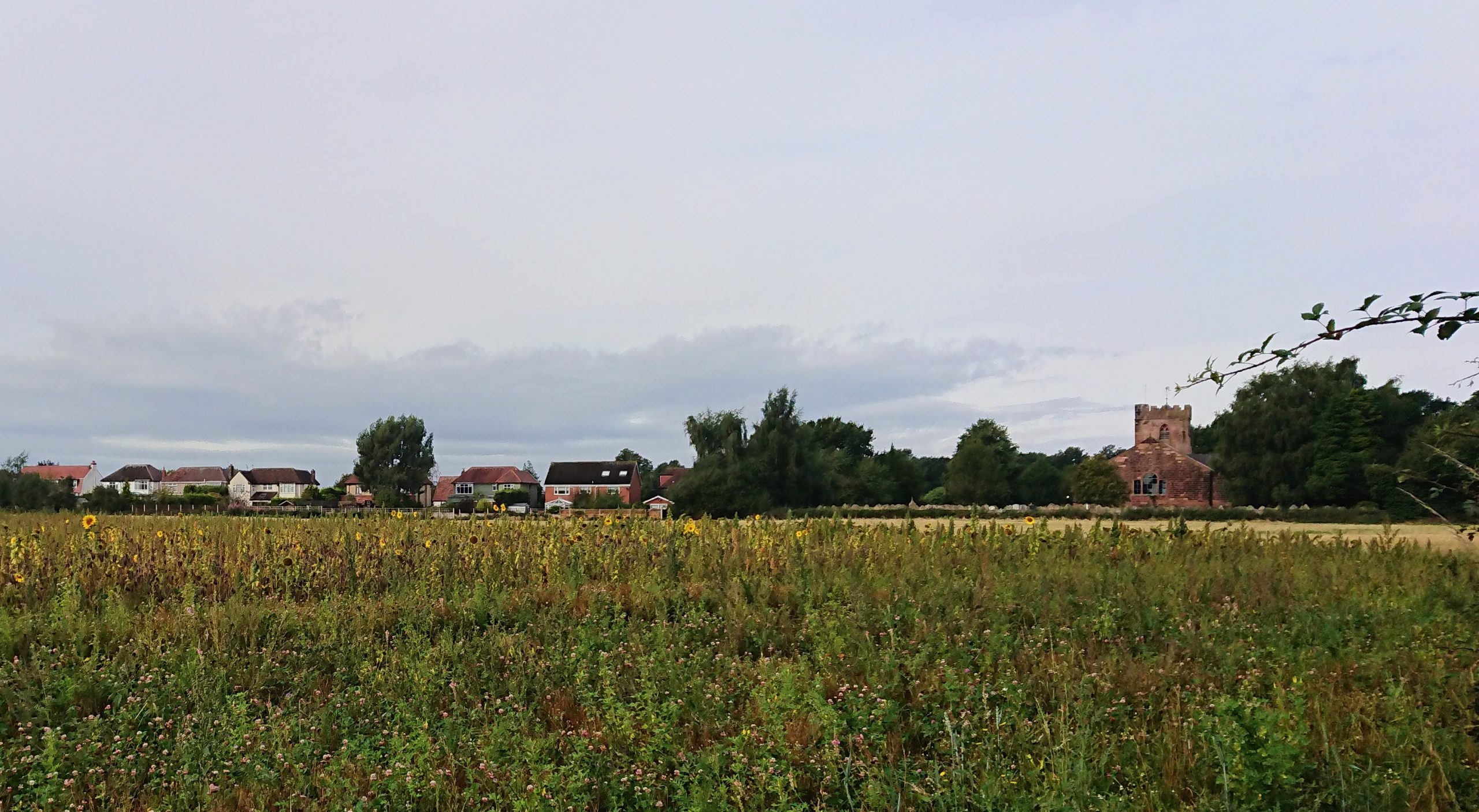
Sunflowers and St Mary’s Church in the distance
There are replacements, though: half a dozen peewits (lapwings) roosting in a cut field, one flying, its wide, dark, feather-fringed wings flapping in a liquid, seemingly boneless, way; linnets bathing in a puddle along one of the farm tracks; gulls picking their way across a ploughed field, intent on finding worms; more gulls roosting in another field, then rising en masse and making their squawking way to the river, where they settle on the water, waiting for the tide to recede and expose the nutrient-rich mud; five shelduck – adults and juveniles – some bottoms up in the water and the others scouring the shore; a great black-backed gull, drifting menacingly on the tide; a group of oystercatchers half-asleep; a flock of about 30 dunlin wheeling this way and that, looking for the best place to land and feed; two kestrels hunting together over the scrub near the lighthouse. I can hear curlews calling in the distance, and the whole of Merseyside’s heron community seems to be arranged along the boundary between shore and water, interspersed with a cormorant or two and a little egret.
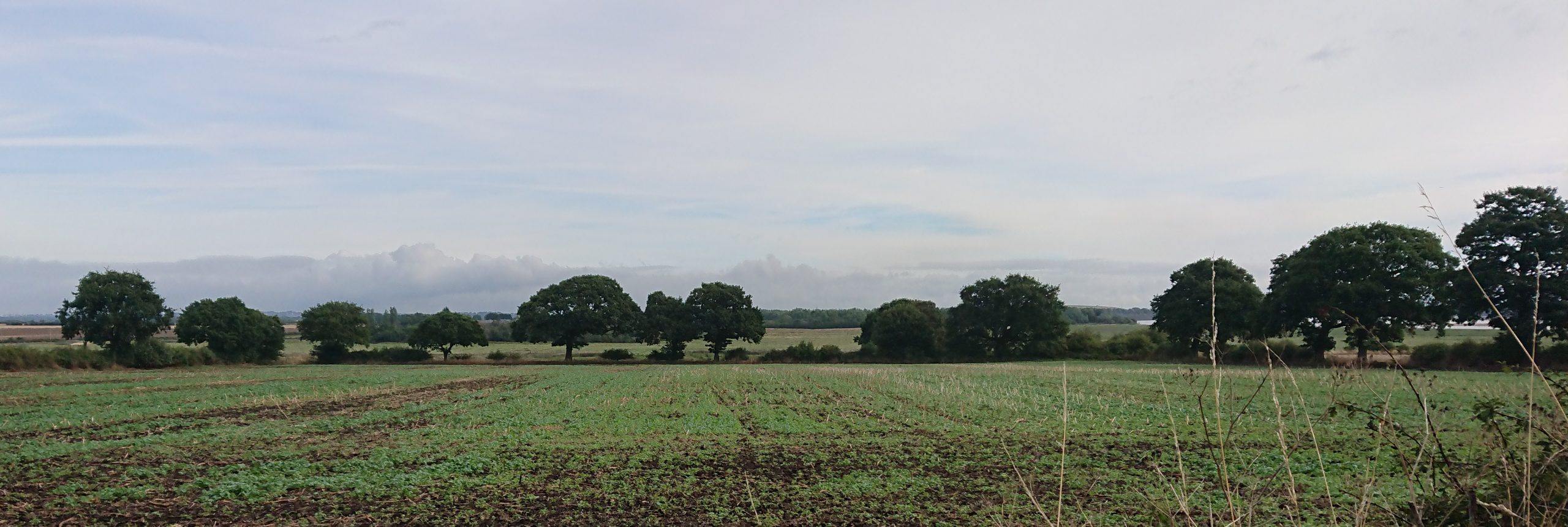
Spot the peewits!
As I stop for a moment to admire the arch of the old Runcorn Bridge, and the delicate angular outlines of the new bridge behind it, four swallows race past – always a pleasing sight.
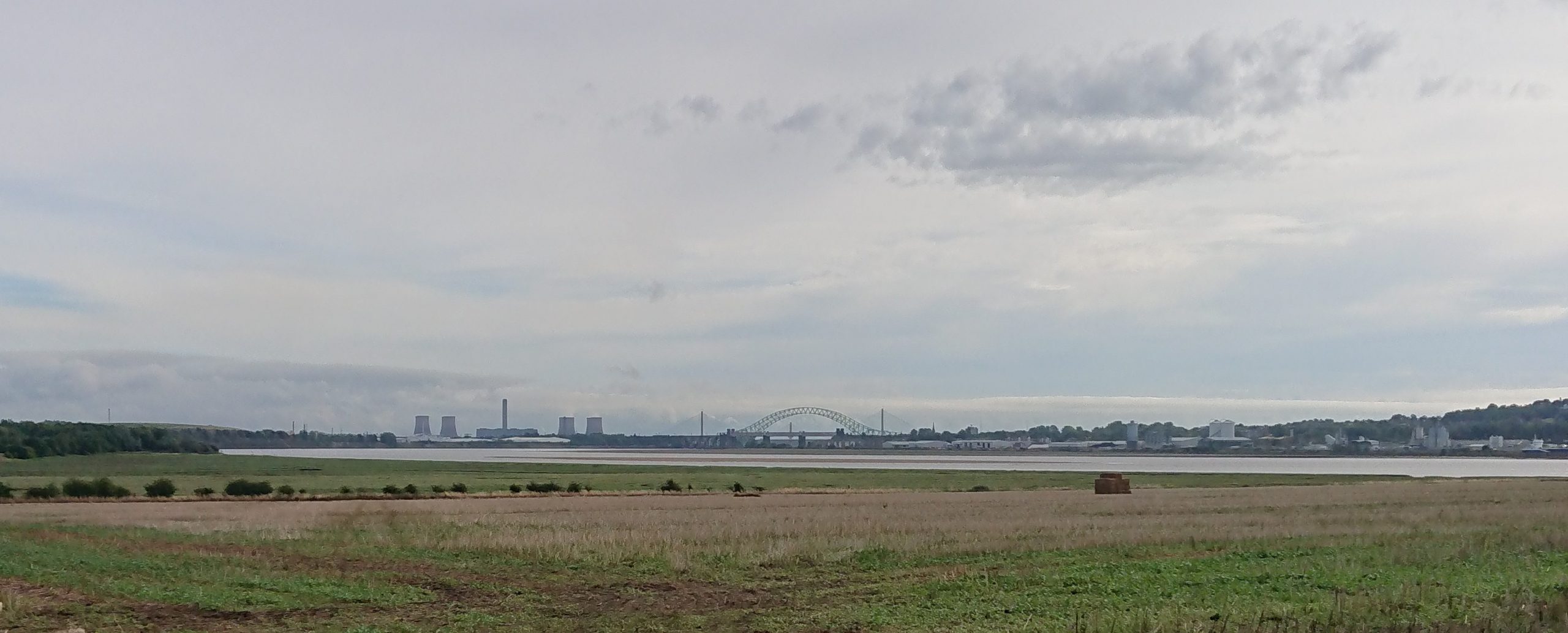
A distant view of the two Runcorn bridges
Then, walking along the shore path, I startle a goldfinch in the goosefoot at the field edge. It rises, twittering, and I start to apologise for disturbing it when I myself am startled by an explosion of another 30 or so finches, all previously hidden in – and gorging on – the seed-filled ‘weeds’. All in all, there are three large flocks of linnets and goldfinches swirling around the fields and shore, swooping into the vegetation to feed for a minute and then rushing back up to the safety of the air or the trees.
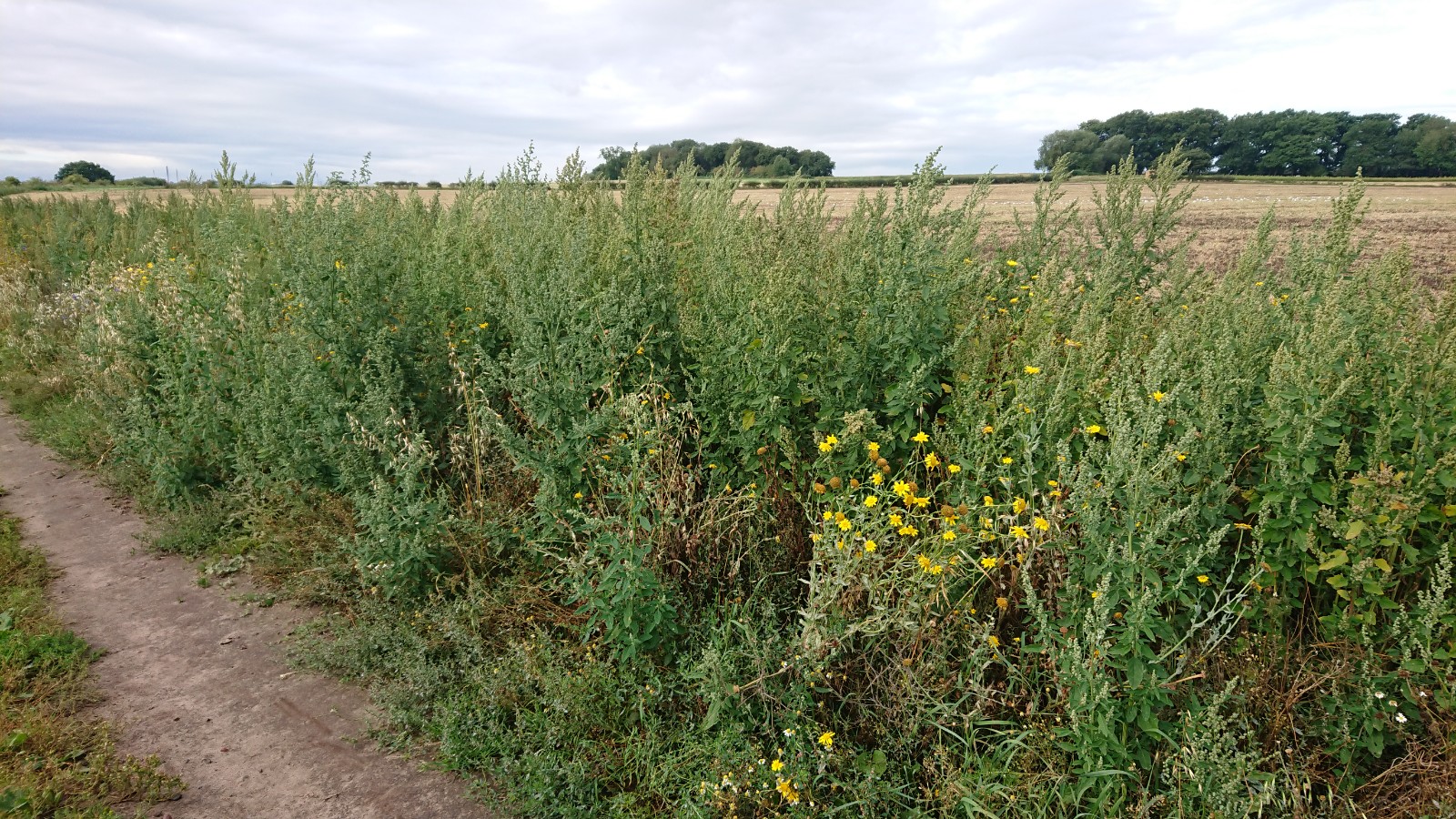
White goosefoot and common fleabane
As I reach the lighthouse, the weather – which had been sunny and warm – is starting to change; a ‘front’ is approaching from across the estuary, bringing rain. I have a quick read of the two noticeboards there – explaining the importance of ‘Mersey Mud’ and outlining the history of the Mersey ‘Past and Present’ – then decide against walking further to look for yellow wagtails, and turn up Lighthouse Lane, but the rain catches me and I end the journey somewhat wet. It’s been a pleasant and impromptu morning out, though, although my heart hurts these days when I see a swallow: a bird that once brought joy as a harbinger of summer but now serves as a reminder of what is being lost, as their numbers seem to have plummeted this year and, if they’re not here breeding, then there will surely be fewer again next year. The outlook seems bleak, but I hope I am wrong. And with that thought, I start for home.
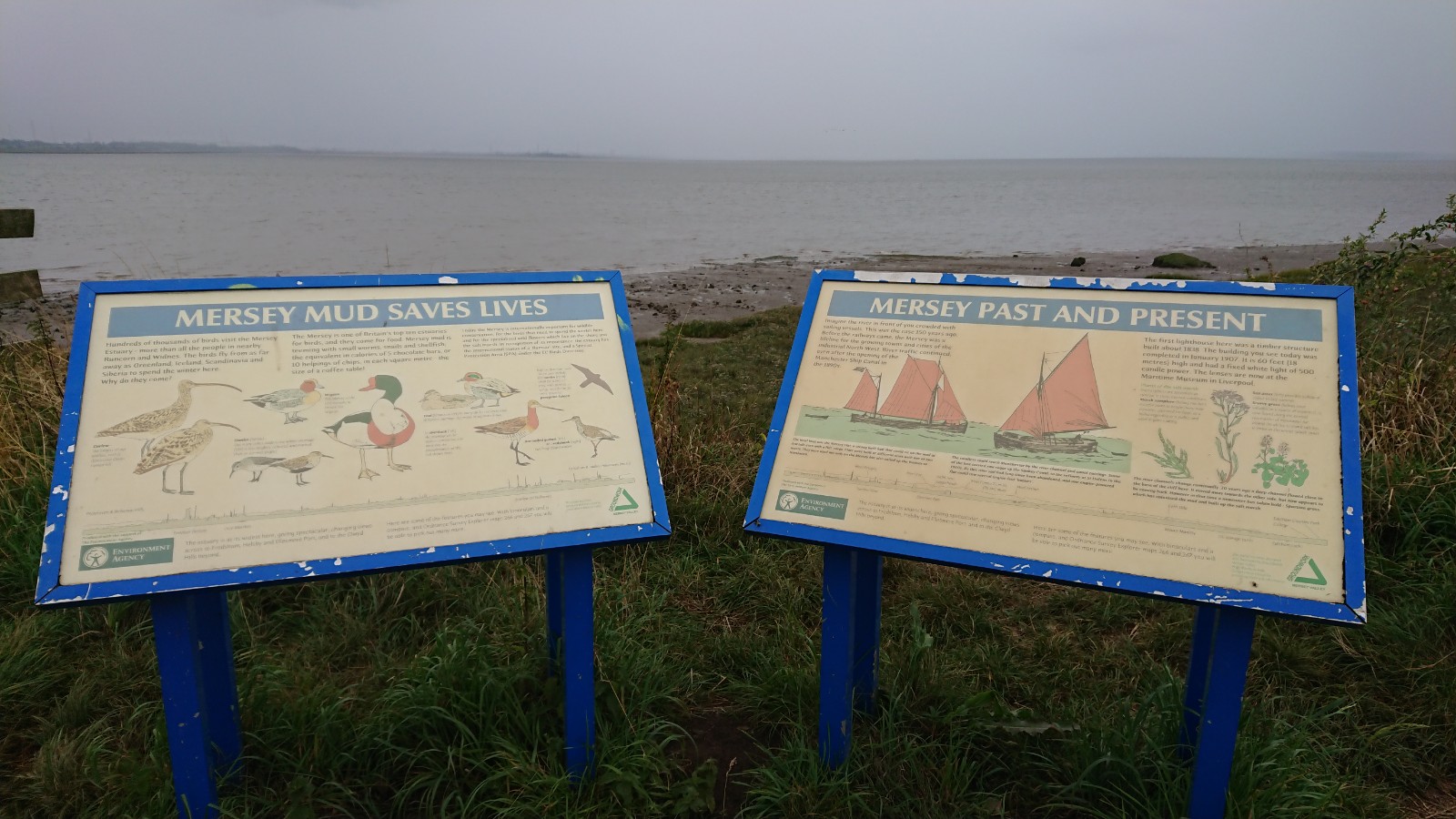
Mersey Mud Saves Lives and Mersey Past and Present information boards