

Fungi on the allotment
Late summer is a slow time, a waiting time, a time of stillness. Birders especially kick their heels, chafe at the bit, anticipating autumn and the richness of returning species. As July gives way to August, and August to September, the signs of change speed up until one morning you are looking at a 20-strong flock of birds foraging on a grassy field and there’s a chance that they could be redwings or fieldfares – Scandinavian natives come to sojourn in Britain’s milder climes. The fact that they are actually mistle thrushes is not really a disappointment, for seeing a large flock of such a usually solitary species is a delight in itself, and it leads to a musing on other local signs of autumn.
There are a number of changes in the avian world. Black-headed and common gulls returned in August, the former bringing very vocal tidings of autumn to Liverpool Marina; the latter performing their comical winter worm dance in the fields along Otterspool Prom. The shelduck, large, colourful ducks which breed on the Mersey Estuary, have journeyed to the Wadden Sea to moult in huge numbers and may not return until November. Only their young, pale imitations of the parents, remain.
On the 18th September, I saw and heard my first pink-footed geese of the season, returning in their thousands to these bountiful shores. A spotted flycatcher at the allotment on the 17th was a first for the plot and a total delight to see, building up its strength to cross the Mersey and continue on to Africa. Their numbers declined by nearly 90% between 1967 and 2010 (https://www.bto.org/understanding-birds/species-focus/spotted-flycatcher), so I strongly hope that this bird and the ones seen near Speke Hall in the summer bred here.
Elsewhere on the allotment are plump orange pumpkins, waiting for Hallowe’en. Acorns and conker cases litter the ground and the air rings with the harsh chatter of the usually shy jays, and shimmers with squirrels, tails wavering with excitement as they root amongst the leaves for precious cargo.
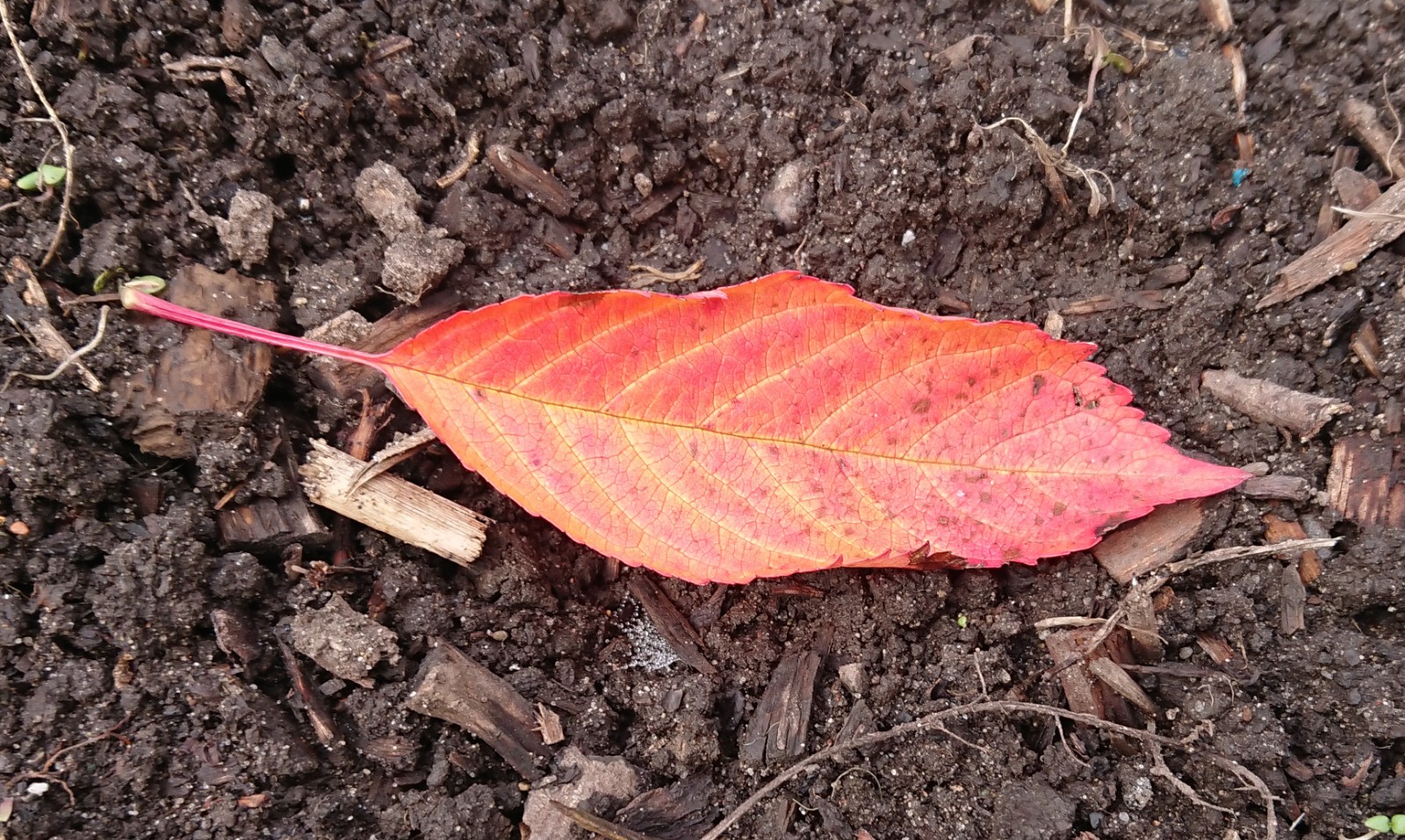
Fallen cherry tree leaf at the allotment
Ah, the leaves! The quintessential sign of autumn is the leaves turning from green to various gaudier hues, letting go, and spiralling to the ground, to provide a dense crispy or soggy carpet on which to walk. However, this year’s heatwaves stressed the trees so much that they started shedding their leaves in July – a worrying signal of climate catastrophe, bringing fears for the future, as how will these trees have sustained themselves in late summer and early autumn, and what does this mean for their winter survival and spring resurgence? (See https://www.bbc.co.uk/news/science-environment-62582186 for a discussion of this ‘false autumn’.) The blackberries were early, too – no longer a late August-early September bounty but one that comes in July.
The signs are changing but our reference points – the nature writing we respect and love – have not yet caught up. We can turn to phenology (see Nature’s Calendar, https://naturescalendar.woodlandtrust.org.uk/) and note the advancing of these changes in an intellectual way that our hearts have not yet processed or accepted. Three million records going back almost 300 years – and now comes a catastrophic quickening that we are unable or unwilling to stop. So take the time to enjoy and marvel at nature each day – we will miss her when she’s gone.
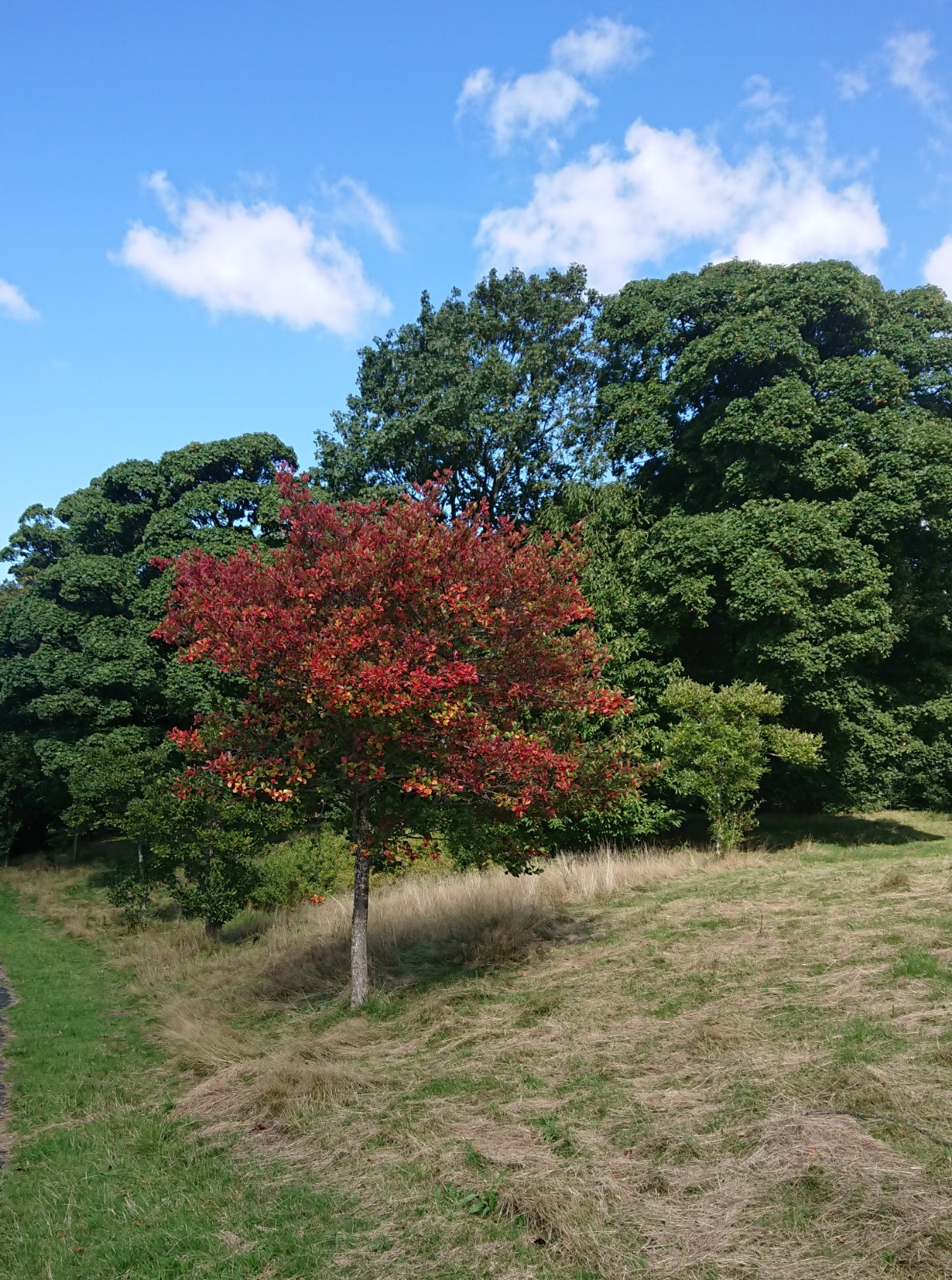
Autumn changes at Sefton Park